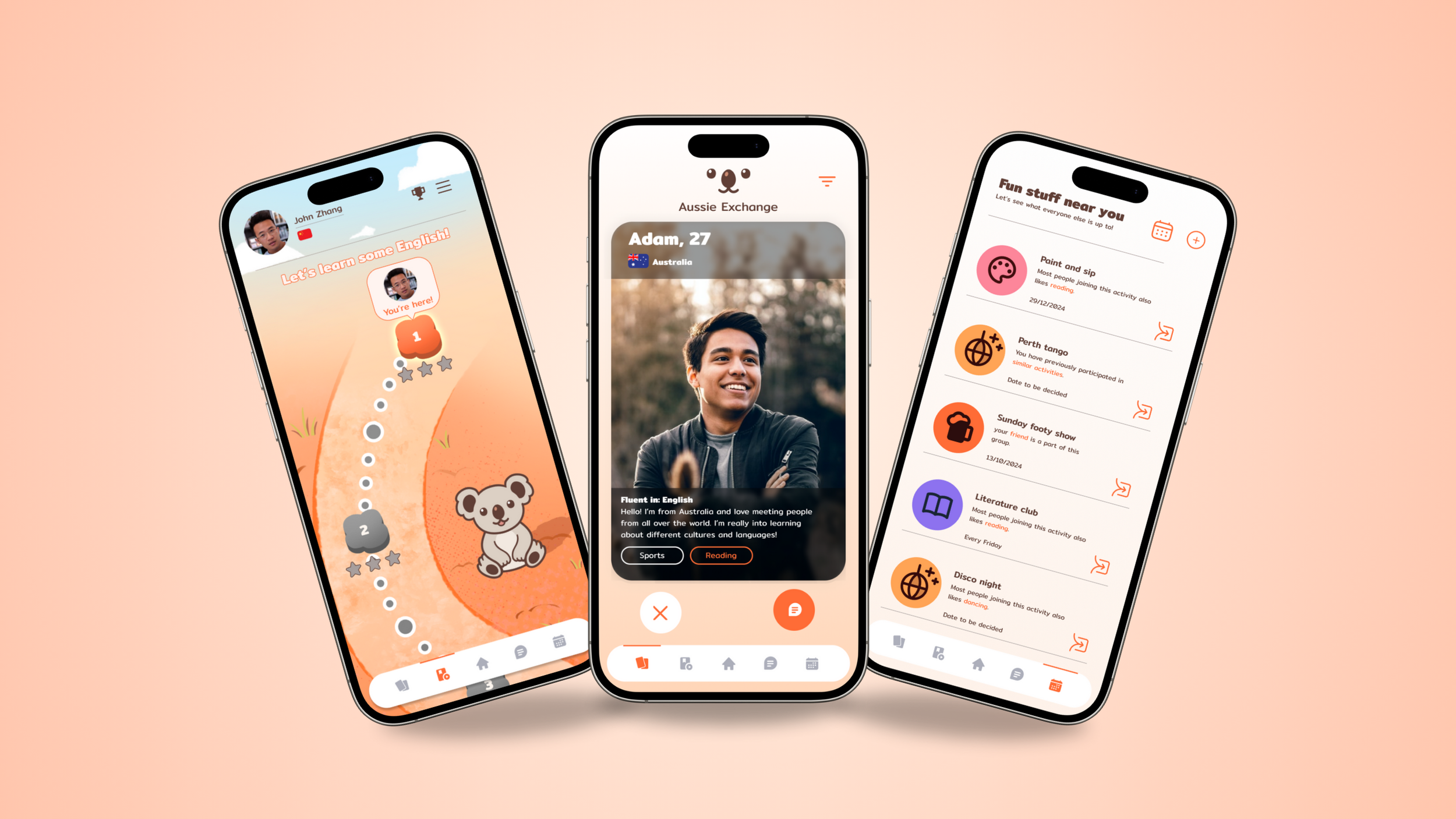
Link to Prototype
Click me!
Link to Prototype Click me!
Aussie Exchange
DURATION: August 2024 - October 2024
Approximately 44% of Australians are functionally illiterate, and language barriers often prevent individuals, especially immigrants, from fully engaging with the broader community (ABS 2013).
This creates challenges in exploring Australian culture, participating in social interactions, and integrating into society. To address these issues, I aim to create a digital platform that facilitates cultural exchange, promotes social inclusion, and enhances community integration. The platform will feature tools and functionalities that support language learning, cultural exchange, and collaborative interactions.
Objectives & Goals
• Foster cultural understanding and integration within the Australian community.
• Provide platforms that facilitate meaningful cultural exchange and interaction.
• Create user-friendly digital tools that promote social inclusion and cultural education.
• Increase confidence in communication skills among users, particularly those facing language barriers.
Initial User Research
& Market Analysis
User Research:
I examined the needs of Australian locals and immigrants, recognising that cultural exchange is essential not just for enrichment or becoming more cultured but also because 44% of Australians are functionally illiterate (ABS 2013).
This underscores the need for cultural exchange experiences that go beyond mere learning. Practical outcomes, such as forming new friendships or acquiring new skills, are crucial because many people lack the motivation to engage with a new language or culture unless they gain something tangible from the experience.
Market Analysis:
I analysed existing apps like HelloTalk, Tandem, and ReciMe and found them broad and primarily focused on broad, international cultural learning (HelloTalk 2024; Tandem 2024) or do not feature cultural education at all (ReciMe 2024). They lacked specificity, particularly in addressing the needs of Australians and immigrants in Australia. This gap in the market informed the development of more focused and impactful concepts.
Target Audience
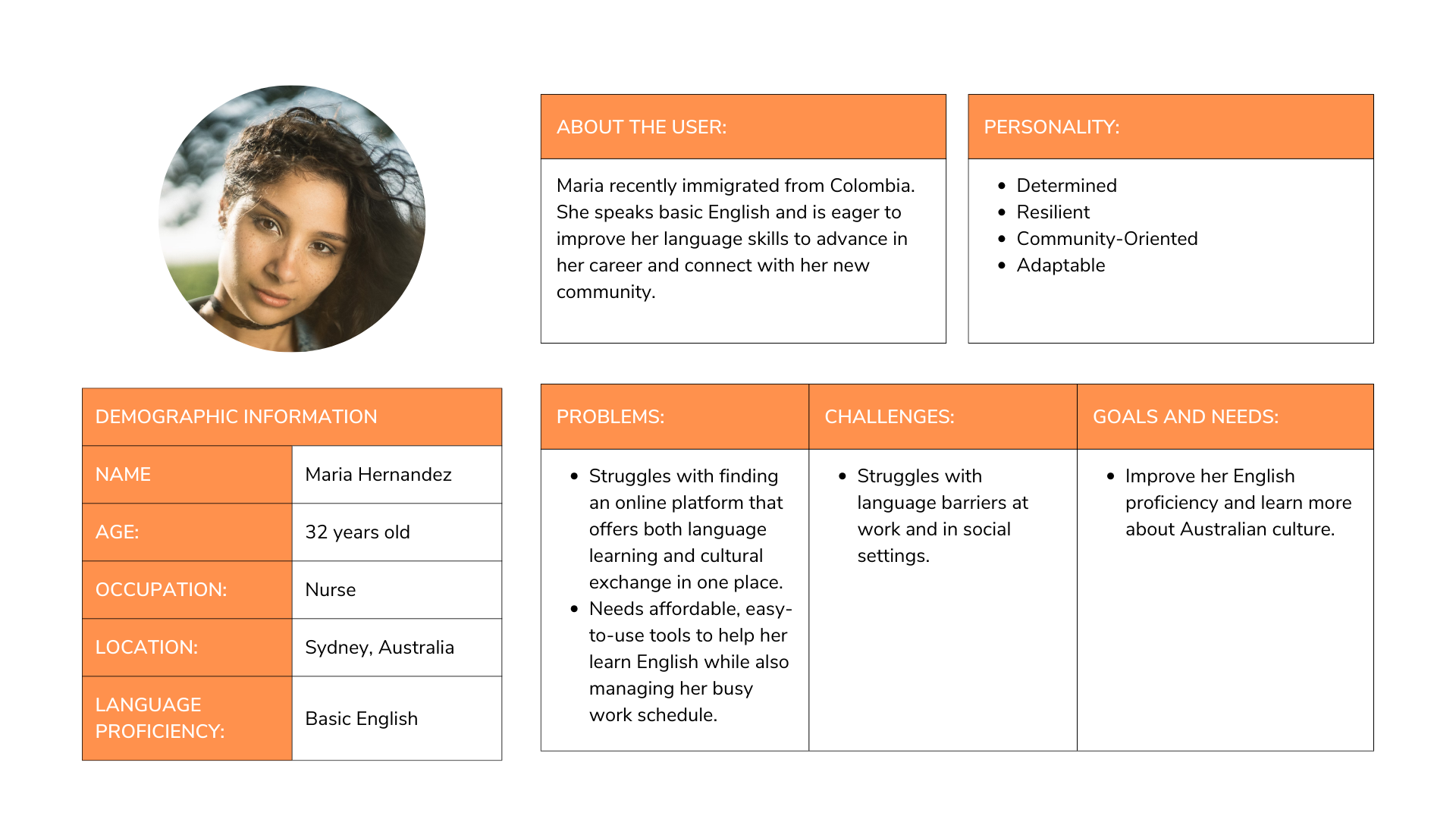
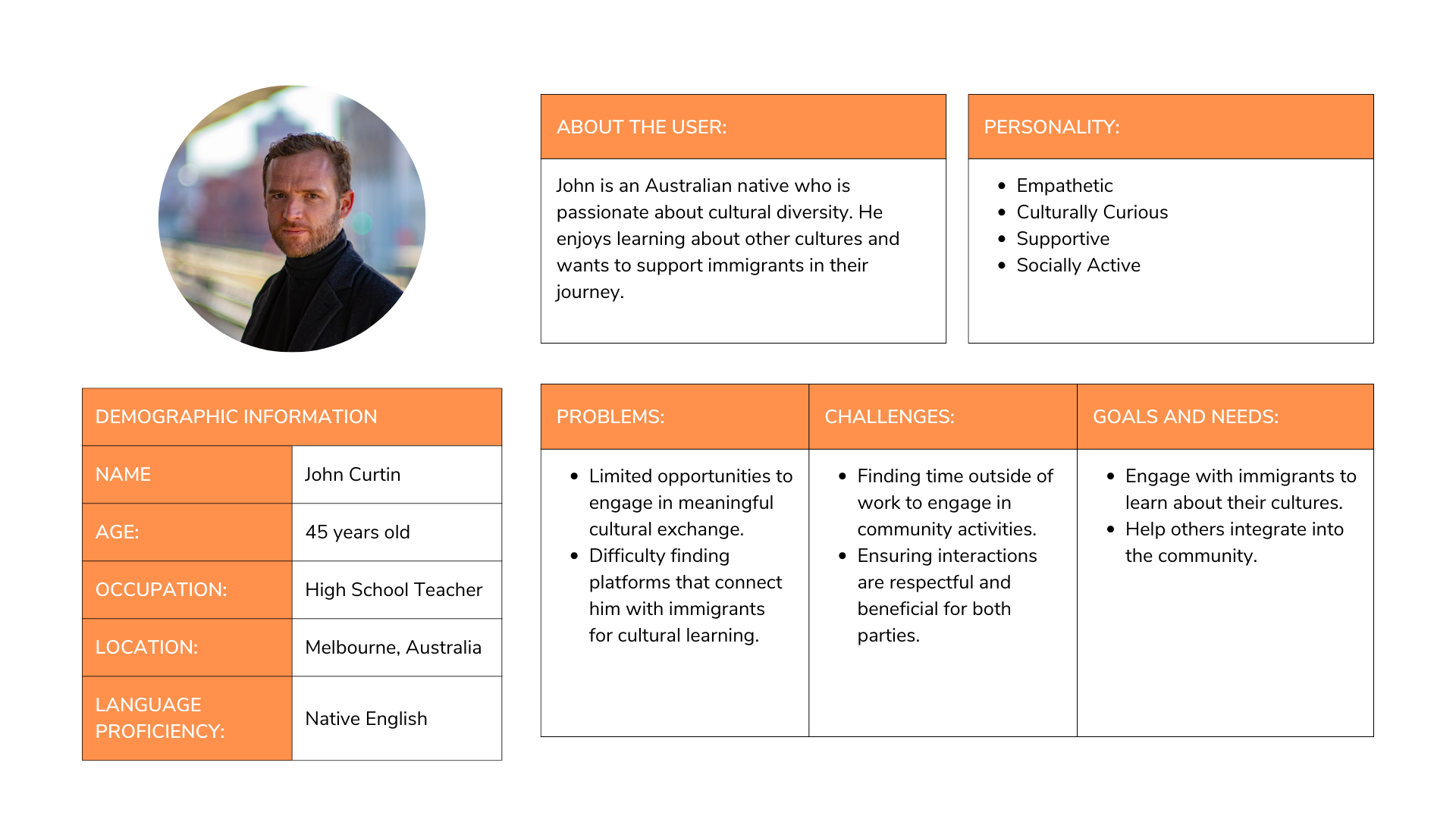
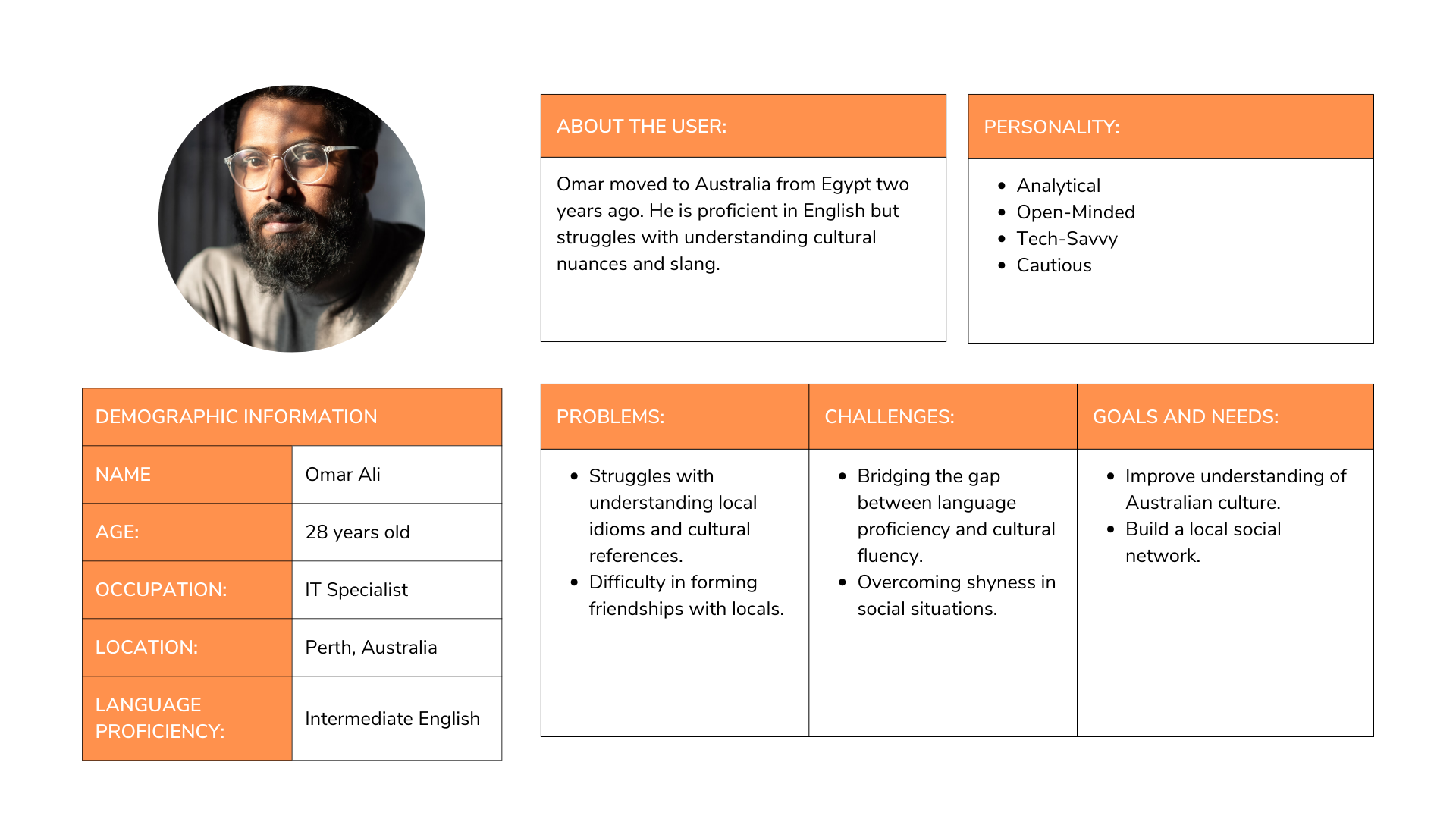
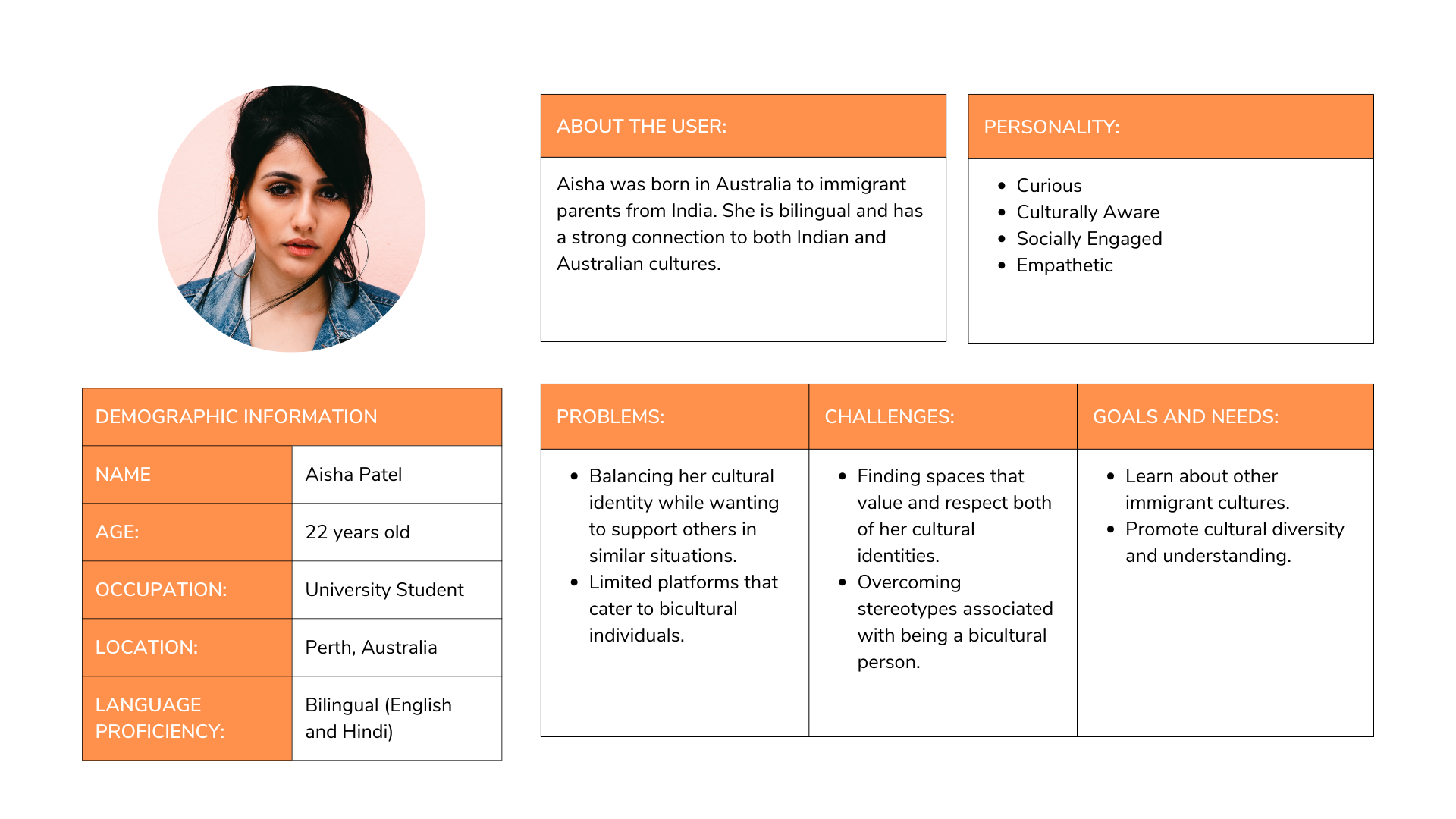
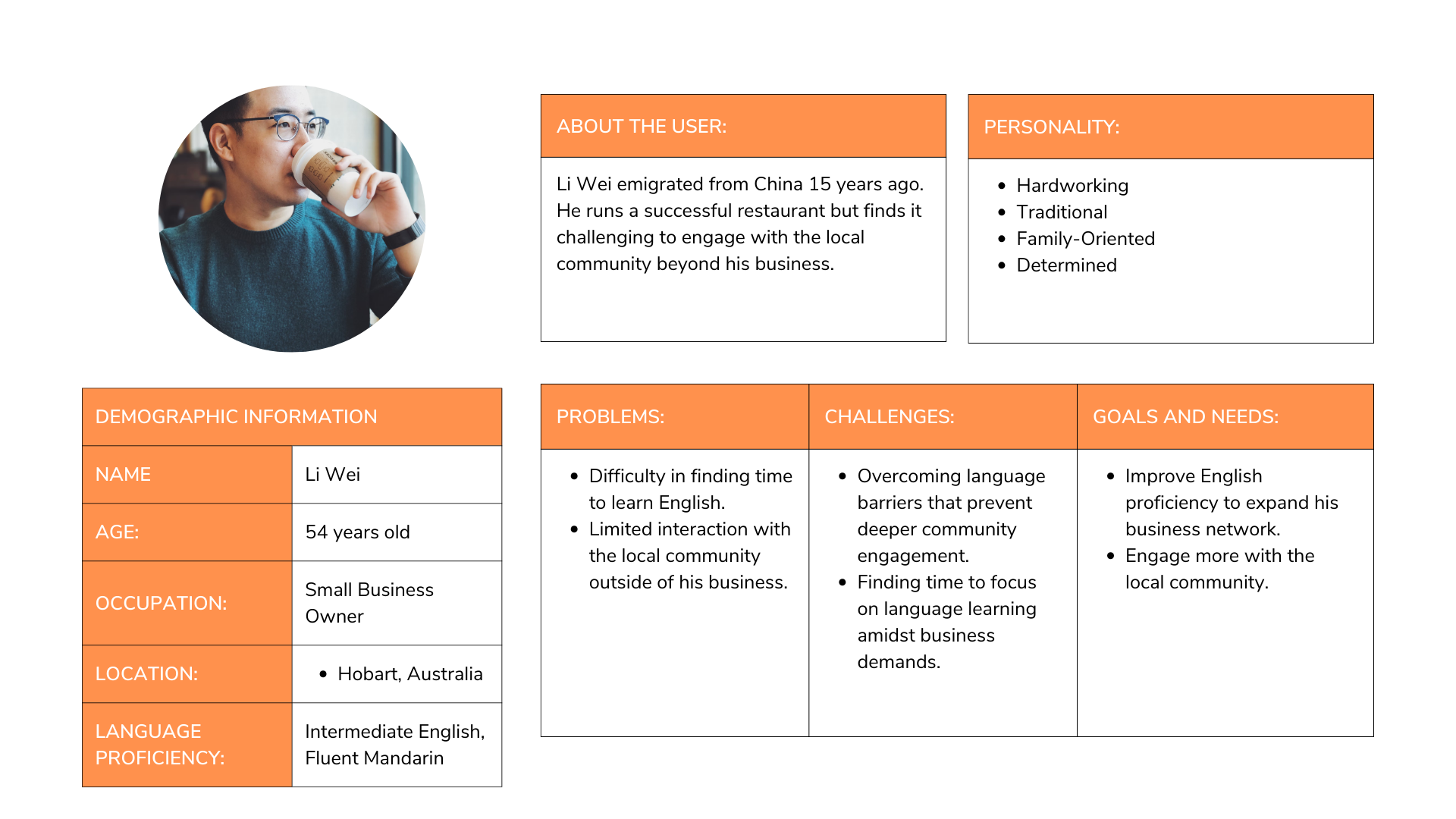
• New immigrants to Australia seeking to explore and integrate into Australian culture.
• Australian locals interested in learning about and engaging with other cultures.
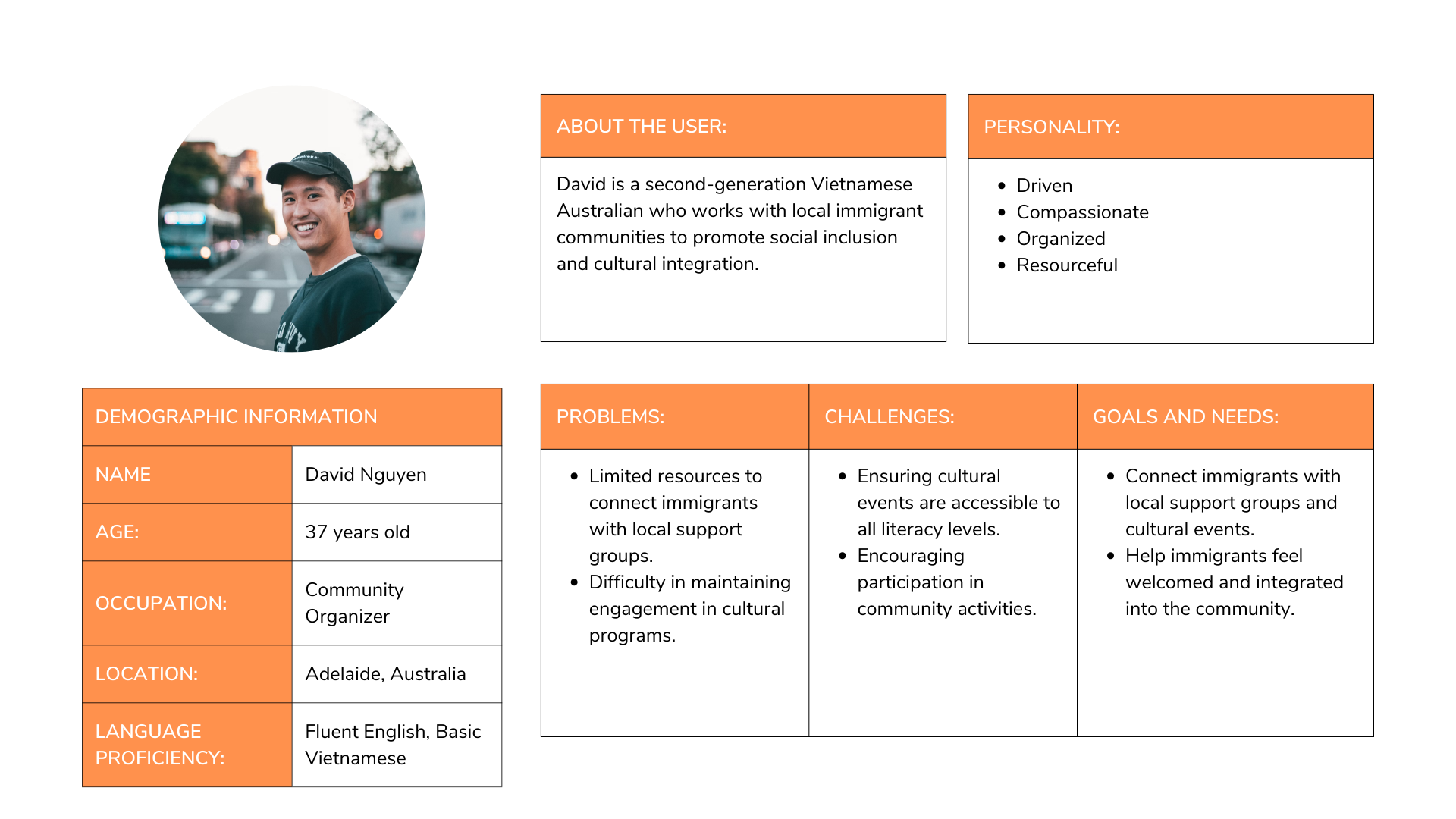
• Community organisations and support groups focused on cultural integration and social inclusion.
Feedback
Feedback type: User
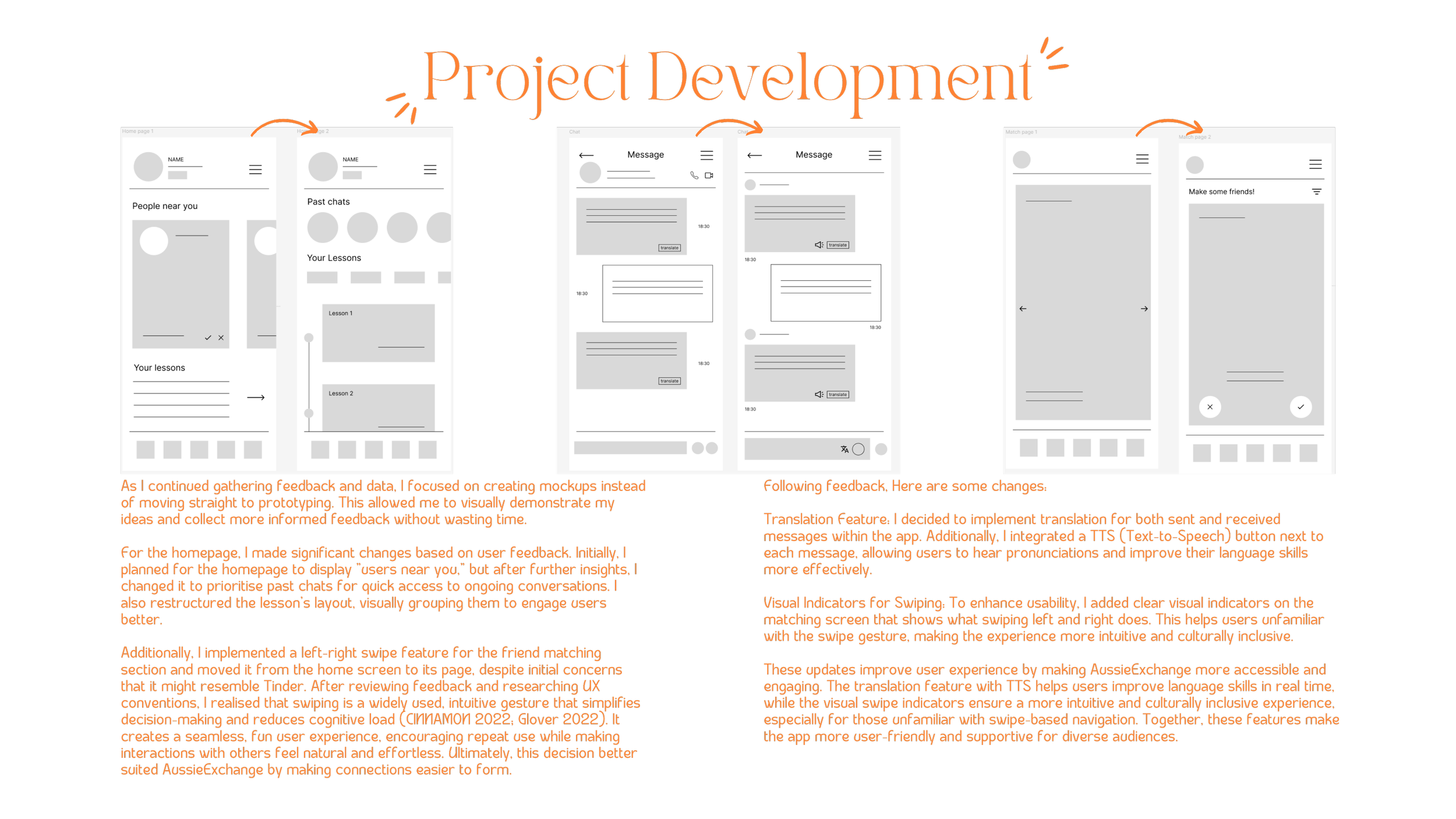
The user suggested adding visual indicators (such as a cross or tick) on the swipe screen to clarify what swiping left or right does. This would be helpful for users from different cultures who may not be familiar with the Tinder swipe convention.
Response:
In response, I added clear visual indicators on the matching screen to show what swiping left and right means. This enhances usability for all users, especially those unfamiliar with the swipe gesture, making the experience more intuitive and culturally inclusive.
Final Concept
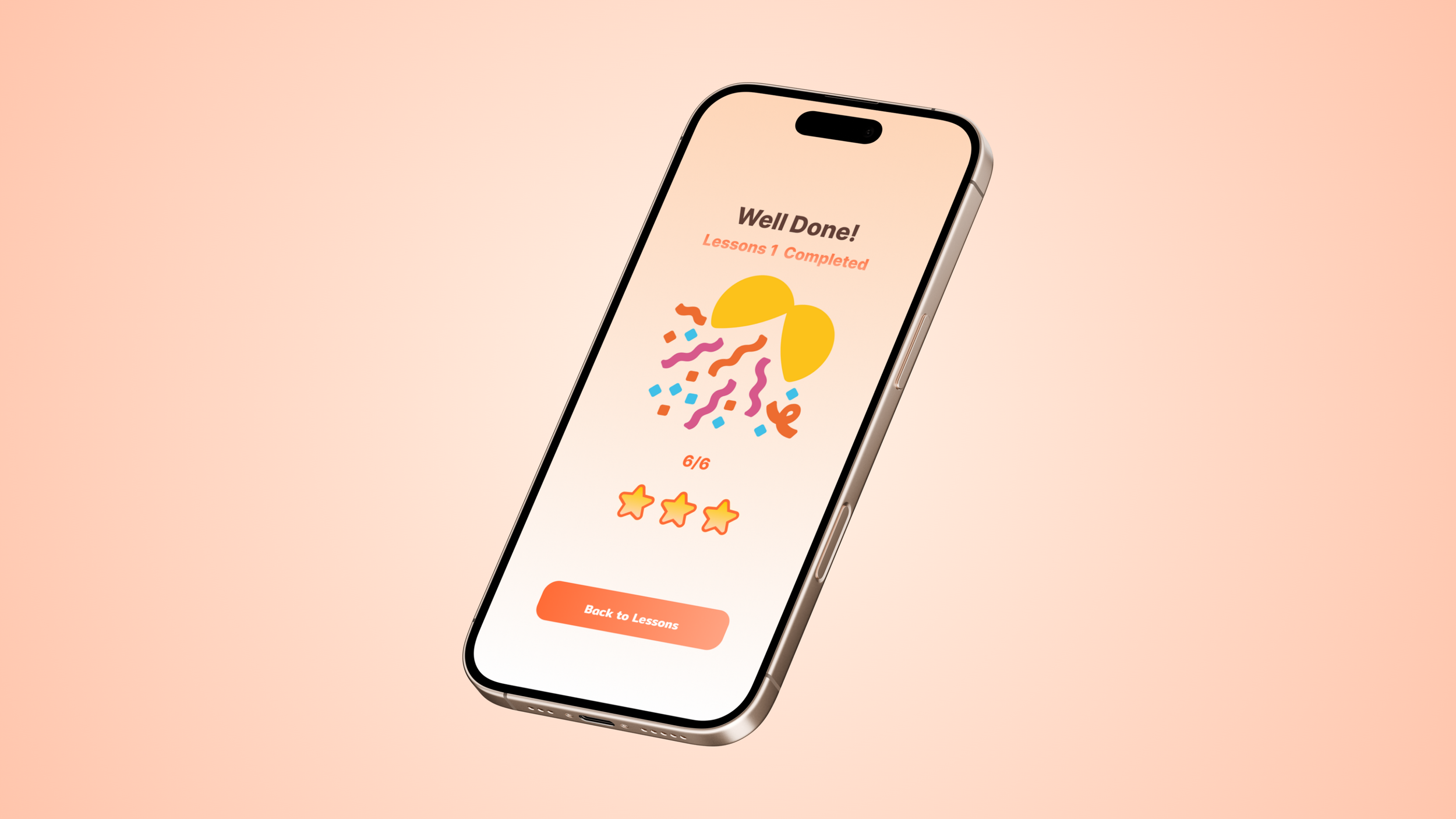
Connection to Initial Goals: In Assessment 1, my primary goals were to:
Foster cultural understanding and integration within the Australian community.
Provide platforms for meaningful cultural exchange and interaction.
Create user-friendly digital tools that promote social inclusion and cultural education.
Increase users’ confidence in communication skills, especially for those facing language barriers.
I believe that with the help of feedback and user testing, the features in this app successfully meet these goals in helping to bridge the cultural gap between Australian locals and immigrants, providing everyone with more opportunities.
Finishing Thoughts
Feedback type: Tutor
The tutor recommended exploring Tinder's swipe UX convention for user matching in AussieExchange, despite my initial concerns that it might resemble a dating app rather than a cultural exchange platform.
Response:
Upon further research, I found that the swipe gesture has become a standard UX feature, making it intuitive and effective for user engagement. I decided to implement the left-right swipe for the friend-matching feature, as it simplifies decision-making, reduces cognitive load, and encourages repeat use. This led to the final decision of incorporating large screen swiping for better usability.
Feedback type: User
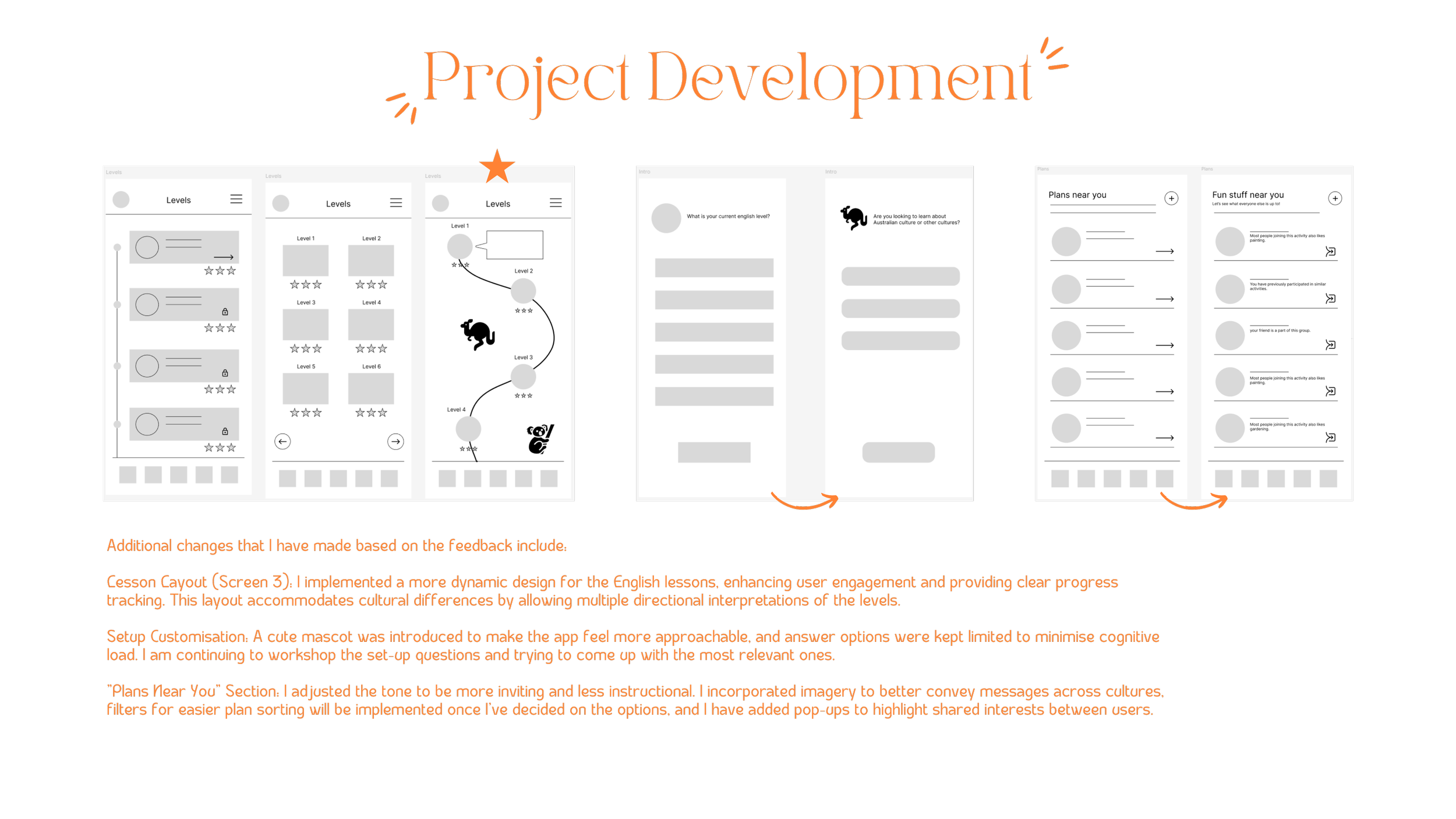
The user preferred Screen 3 for the English lesson levels because it feels less static and offers a sense of rhythm and motion. The path-like layout, similar to Candy Crush levels, provides a sense of direction, achievement, and progress. Additionally, the design is more culturally inclusive as users can interpret the levels in various directions, unlike the top-to-bottom format in Screens 1 and 2.
Response:
I chose to implement the layout from Screen 3 for the English lesson levels, as it enhances user engagement with a more dynamic design, provides clear progress tracking, and accommodates cultural differences by allowing multiple directional interpretations.
Feedback type: User
The user suggested that the homepage should prioritise displaying current and past chats instead of a "people near you" section, as most users would likely return to the app to continue existing conversations. They also recommended restructuring the lessons into visually distinct groups for better usability.
Response:
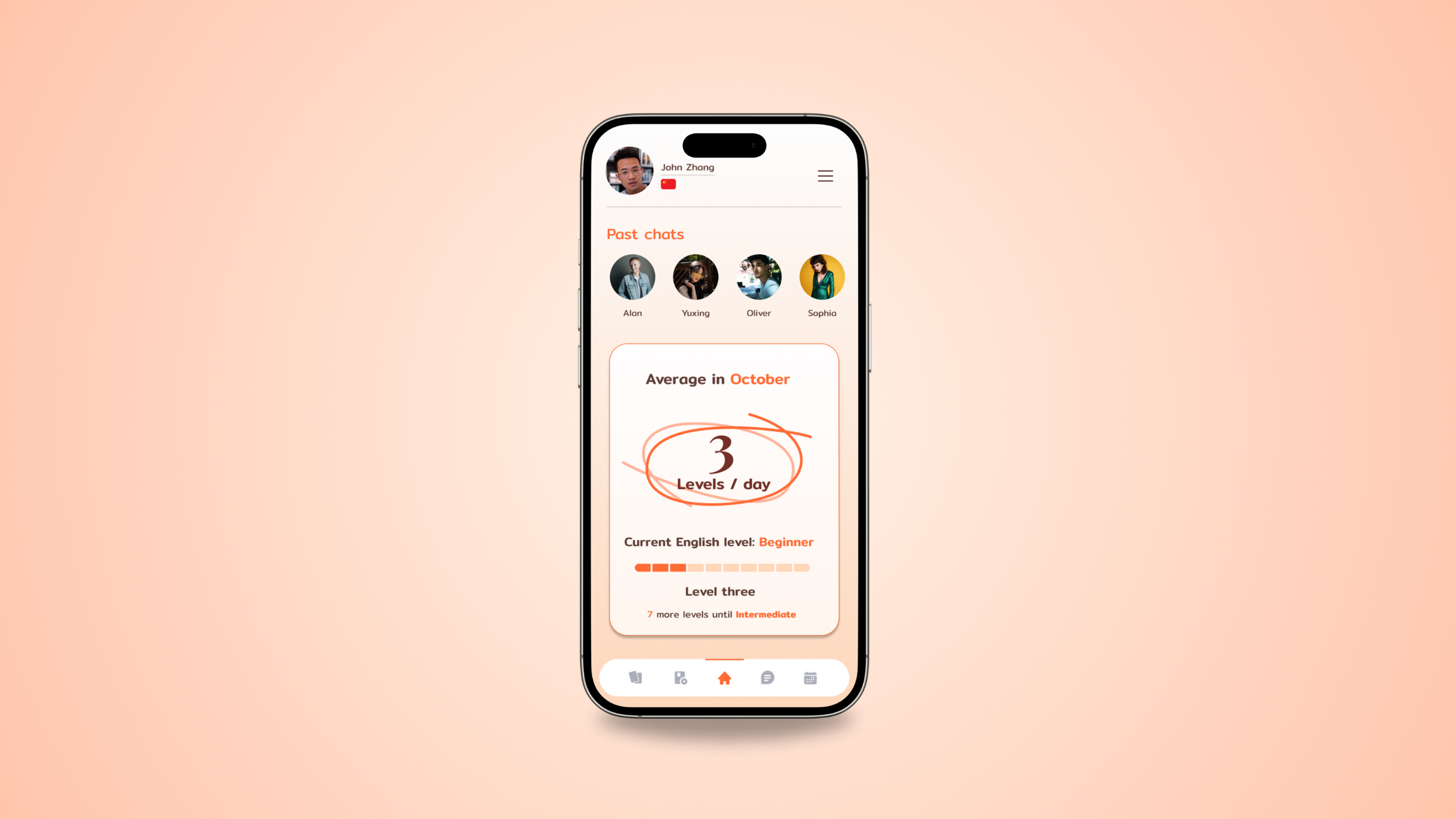
Based on this feedback, I changed the homepage to display past chats for quick access to ongoing conversations. I also implemented a more structured layout for lessons, grouping them visually to encourage users to engage with the content more effectively.
Feedback type: Tutor
The tutor advised making the tone of the "Plans Near You" section less instructional to create a more welcoming environment for users to interact with others. Additionally, they suggested incorporating more imagery to communicate messages clearly, considering the app’s multicultural user base. Filters could also help users sort through plans, and small pop-ups or indications should highlight how plans are related to the user’s interests or past activities, helping users feel more connected to others with shared interests.
Response:
I will adjust the tone of the "Plans Near You" section to be more inviting and less instructional. Imagery will be used to convey messages across cultures more effectively, and filters will be introduced for better plan sorting. Pop-ups will indicate shared interests between users to encourage participation and engagement.
Feedback type: User
The user suggested that the app should include the ability to translate both incoming and outgoing messages directly, without needing external tools like Google Translate. Additionally, they recommended adding a text-to-speech (TTS) feature for each message to help with pronunciation learning.
Response:
Based on this feedback, I plan to implement translation for both sent and received messages within the app. I will also integrate a TTS button next to each message, allowing users to listen to pronunciations and improve their language skills more effectively.
Feedback type: Tutor
“Are you questioning and testing your assumptions about the design problem and potential solutions? It’s crucial to challenge the assumptions you’ve made during the design process. Are there alternative approaches or viewpoints that you haven’t considered yet?”
Response:
In response, I will continue to interview and conduct research with both locals and immigrants to gather diverse perspectives and ensure the app's design isn’t limited to my own viewpoint as I develop this prototype. This user testing will help challenge assumptions and uncover alternative approaches to improve the app’s overall effectiveness.
Feedback type: Tutor
“Design is not just about functionality; it’s also about how it resonates emotionally with users. Consider how your design makes users feel. Are you addressing their emotional needs and creating a positive experience? How does your design impact users on an emotional level?"
Response:
Based on this feedback, I will achieve this by incorporating a warm and friendly colour palette to evoke comfort, using playful mascots to reduce intimidation, and adding culturally inclusive imagery to foster a sense of connection. Additionally, positive feedback animations and sounds will reinforce user achievement, helping create a more positive and meaningful experience.
Feedback type: Tutor
The user suggested that the setup page should include more personalised questions to tailor the app experience better. They also recommended adding a cute mascot to make the app feel less intimidating. Additionally, they advised limiting the number of answer options for each question to reduce cognitive load.
Response:
In response, I plan to expand the setup page with more personalised questions to enhance user experience customisation. A cute mascot will be introduced to make the app more approachable, and I will ensure that answer options for each question are limited and concise to minimise cognitive load.
Feedback type: Tutor
The industry professional suggested integrating the translation feature in the messenger with the app’s language learning levels. Once users reach a certain level, the translation feature should switch to an auto-correct assistant to encourage independent language use, but users should have the option to switch back. They also recommended including a setup question, "What are you looking for in the app?" to tailor the experience to individual needs. Additionally, profile settings should be organised into clear categories to reduce cognitive load and improve usability.
Response:
In response, I will integrate the translation feature with the language learning levels, transitioning to an auto-correct assistant once users reach a certain proficiency. However, the translation tool will remain available as an optional feature. I will also add a setup question asking users what they’re looking for in the app to customise the experience from the start, and profile settings will be reorganised into categories for easier navigation and reduced cognitive load.